Graduated compression from 14 mmHg at the calf to 16 mmHg at the ankle and 18 mmHg at the foot. Firm enough to support circulation on a long shift and comfortable enough to forget you have them on.
S/M fits shoe size 8 or below. L/XL fits shoe size 9 and up. Our sizing guide at sizing-guide walks through measuring your ankle and calf if you are between sizes.
60% nylon, 25% elastane, and 15% polyester with a cotton cushioned sole. Machine wash cold, tumble dry on low or air dry, do not bleach.
The cushioned sole is cotton terry and the leg is a breathable blend that pulls moisture away from skin, so most people find them cooler than all-synthetic compression socks. If your feet run very sweaty, bring a second pair to change into mid-shift and wash after every wear.
The L/XL size fits calves up to about 19 inches around. Measure your calf at its widest point in the morning. If the top band leaves a deep red line or digs in, the sock is too small. Size up or check our wide calf guide.
Yes, on low heat. High heat wears out the stretch faster, so air drying flat makes them last longest. Skip fabric softener and dryer sheets, which coat the elastic.
Designed in the US and knit in China to our spec.
Ordering runs through Amazon with fast Prime shipping and easy returns. Tap any Buy on Amazon button on this page.
Not sure which size to order? Read the sizing guide for step-by-step ankle and calf measurements, or see how to put on compression socks for the heel-pocket method, how to wash compression socks to keep the elastane working, or the varicose veins guide for how graduated pressure supports venous return.
Longer guides grounded in CDC, NIH/MedlinePlus, Mayo Clinic and Cochrane guidance. A new one publishes every week.
Learn how to wash and dry compression socks properly to protect elastic fibers, maintain graduated pressure, and extend garment lifespan.

Learn why legs feel heavy or restless after long days, how graduated compression supports venous return, and when to speak with a doctor.
Learn the difference between 15-20 mmHg and 20-30 mmHg compression socks, including pressure levels, everyday uses, and clinical recommendations.

Learn the physiological causes of post-shift foot and calf ache in nursing, from venous pooling to plantar strain, and evidence-based ways to find relief.
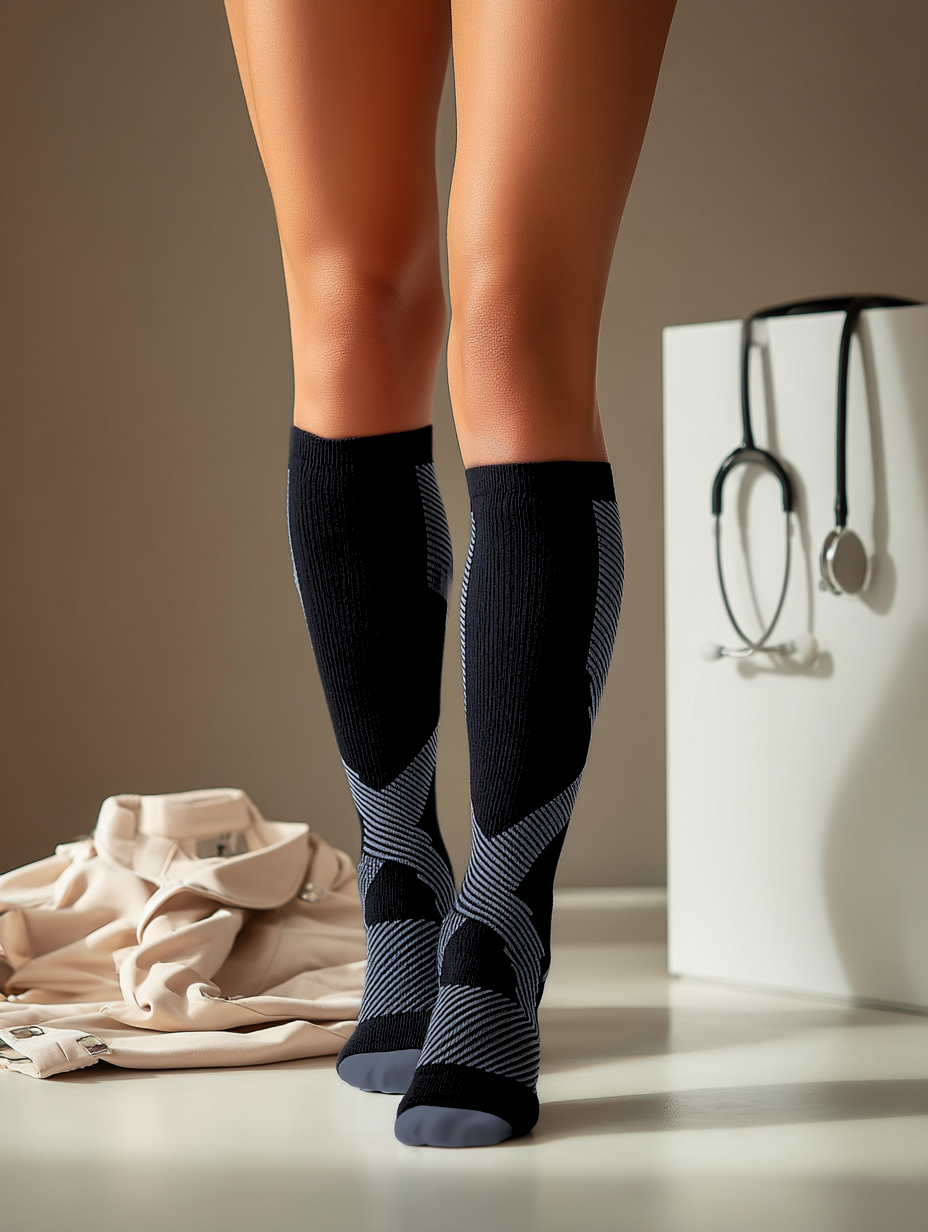
Learn how often to replace compression socks, key signs of worn-out elasticity, and practical care steps to keep your graduated compression effective.

Wearing compression socks after a night shift can offer benefits for leg comfort, but it's generally not recommended to sleep in them. Learn why and when to wear them.

Wearing compression socks during long flights can help support circulation and reduce the risk of deep vein thrombosis (DVT), a type of blood clot.

Compression socks can offer support during pregnancy, especially for nurses on long shifts, by helping to manage leg fatigue and mild swelling.

Compression socks can ease aching, heaviness and swelling from varicose veins, but they don't cure them and evidence that they stop veins worsening is limited. Here's what they can and can't do.
Proper fit is crucial for compression socks to be effective and comfortable. Learn how to measure your legs for the right size.

Explore the key differences between compression socks and regular socks and how they impact leg comfort and circulation.

While compression socks are not a primary treatment for plantar fasciitis, they can offer supportive benefits for related symptoms like swelling and fatigue.
Understanding how long to wear compression socks depends on your reason for using them and your individual comfort. Consistency is often key.

Yes for most people, if they fit well. See who should avoid daily compression, warning signs to stop, and how long to wear them each shift.
Learn how compression socks can help manage leg swelling and fatigue, especially after long periods of standing or sitting.
Graduated compression socks are designed to be tighter at the ankle and gradually less compressive up the leg to support healthy blood flow.
For those who spend long hours on their feet, understanding compression sock levels can help alleviate leg fatigue and mild swelling. Mild graduated compression is often recommended.
Nurses often spend long hours on their feet. Compression socks can offer support for leg fatigue, aching, and mild swelling.
Tested by nurses. Designed for long shifts.
Buy on Amazon