
How often should you replace compression socks?
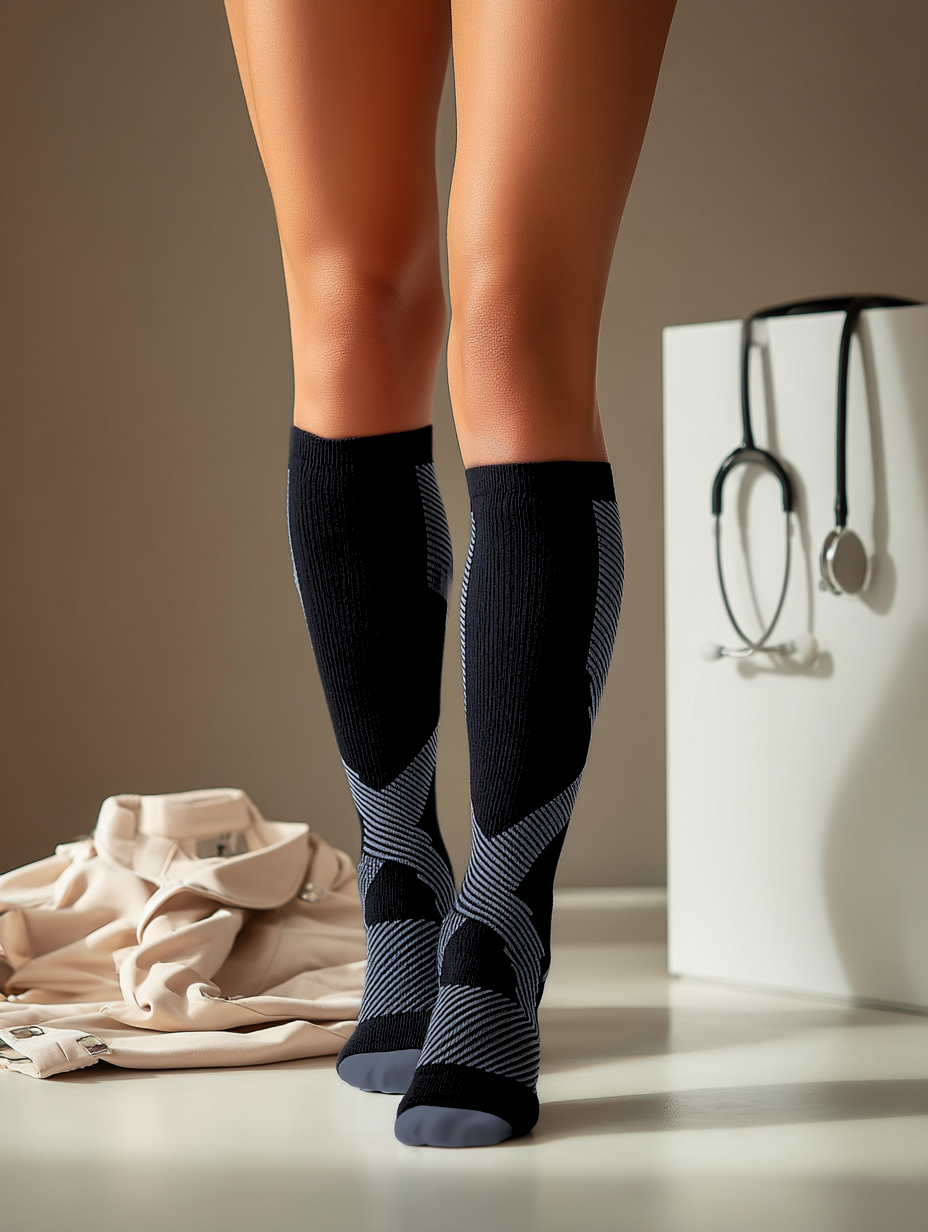
Compression socks do not last indefinitely. While standard athletic or casual socks can be worn until holes appear in the toes or heels, compression garments rely on elastic tension to deliver their primary benefit. Over time, that elasticity naturally degrades, reducing the garment's ability to support circulation.
For anyone wearing compression hosiery regularly, understanding the typical replacement timeline ensures you continue receiving the intended level of support.
The general replacement timeline
Most medical manufacturers, clinicians, and venous health guidelines recommend replacing daily-wear compression socks every three to six months. If you wear the same pair several days a week, the constant stretching, friction, washing, and exposure to skin oils gradually weaken the elastane fibers.
If you own multiple pairs and rotate them throughout the week, your socks will typically last longer. A rotation of three to four pairs might last six to nine months, or occasionally up to a year, depending on how often each pair is worn and how carefully they are laundered. However, even if the fabric looks intact on the outside, the graduated pressure profile may have significantly weakened long before physical holes or tears develop.
Why compression garments wear out
Graduated compression garments work by maintaining a precise pressure gradient, with the firmest compression at the ankle and decreasing pressure as the garment moves up the calf toward the knee. This graduated mechanical pressure assists the veins in returning blood upward against gravity.
To achieve this, the socks are knit with specialized elastic fibers. Every time you pull the socks over your heel, walk for hours on a shift, or run them through a laundry cycle, those fibers stretch. Over months of regular use, the elastane loses its snap and rebound capability. Once the fibers relax, the garment can no longer deliver its rated level of pressure, turning what was once a supportive tool into an ordinary knee-high sock.
Signs your socks need to be replaced
You do not always need to rely on the calendar to determine when it is time for a fresh pair. Your legs and hands will usually notice the changes in the fabric first. Signs that your compression socks have reached the end of their functional lifespan include:
- The socks feel significantly easier to slide on and off than when they were new.
- The garment begins sliding down, bunching at the ankle, or sagging below the knee during normal activity.
- You notice areas of sagging or bagging fabric, especially around the ankle or arch.
- The material feels thin, worn, or visibly stretched out when held up to the light.
- Your legs feel noticeably more fatigued, heavy, or mildly puffy at the end of a shift compared to when the socks were new.
How to prolong the life of your compression socks
Proper care plays a substantial role in maintaining elastic integrity. Heat and harsh chemicals are the primary enemies of spandex and elastane fibers.
To extend the life of your pairs, wash them after each use using cool or lukewarm water and a mild detergent. Washing removes accumulated body oils, sweat, and dead skin cells that can stiffen or break down elastic threads. Avoid fabric softeners, bleach, and harsh stain removers, as these coat or erode the fibers.
Air drying is the gentlest method for drying compression garments. Lay them flat or hang them up away from direct sunlight and radiators. If you must use a dryer, choose a delicate, low-heat cycle or no-heat tumble setting. High heat from standard dryer cycles will rapidly degrade elastic materials.
Sizing, fit, and clinical precautions
Replacing your socks is also a good opportunity to recheck your measurements. Sizing can change with weight fluctuations, changes in lower-leg fluid retention, or muscle changes. Compression garments should fit smoothly against the skin without rolling, pinching, or digging in at the top band. Sizing too small raises the pressure unsafely, while sizing too large prevents effective support.
While mild compression is widely used for leg fatigue, travel, and prolonged standing, certain individuals should consult a healthcare professional before wearing it. If you have peripheral arterial disease, diabetic neuropathy, an active skin infection, open leg wounds, or significant congestive heart failure, speak with your clinician before using compression socks. Compression garments should never cause numbness, tingling, sharp pain, or skin discoloration; if any of these occur, take them off immediately.
Where NursingRx fits your routine
For nurses, healthcare workers, and professionals spending long hours on their feet, having a reliable rotation of durable socks is essential. NursingRx compression socks provide mild, graduated 14-18 mmHg pressure, calibrated with 18 mmHg at the ankle tapering to 14 mmHg at the calf. Designed in the US and tested by nurses, they feature a figure-8 ankle support wrap, targeted arch support, a cotton cushioned sole, a seamed toe, and a non-binding top band to stay comfortably in place throughout a 12-hour shift. Rotating several pairs throughout your workweek helps preserve their graduated elasticity and extends their overall working life.
The bottom line
Plan to replace your compression socks every three to six months if you wear them regularly, or as soon as they lose their snug fit and begin to slide down your leg. Washing them gently in cool water, avoiding high dryer heat, and rotating multiple pairs will help you get the most support out of every pair you own.
References (APA)
- MedlinePlus. (n.d.). Compression stockings. U.S. National Library of Medicine. https://medlineplus.gov/ency/patientinstructions/000598.htm
- Johns Hopkins Medicine. (n.d.). Chronic venous insufficiency. https://www.hopkinsmedicine.org/health/conditions-and-diseases/chronic-venous-insufficiency
- National Health Service. (n.d.). Varicose veins. https://www.nhs.uk/conditions/varicose-veins/
General information only, not medical advice. Ask your clinician about your own health, especially with arterial disease, diabetic neuropathy, open wounds or heart failure.
Graduated 14-18 mmHg. Tested by nurses. Designed for long shifts.
Buy on Amazon