Graduated pressure supports circulation
A 14–18 mmHg gradient is firmest at the ankle and eases up the calf, helping blood move back toward the heart instead of pooling in the lower leg during long, still hours.
Guide
Deep vein thrombosis — a blood clot in a deep leg vein — is serious, and honest information matters more than marketing here. Light graduated compression like our 14–18 mmHg socks can play a supporting role in everyday circulation and prevention habits, but it is not a treatment for DVT. Here's the straight answer on where compression fits.
A 14–18 mmHg gradient is firmest at the ankle and eases up the calf, helping blood move back toward the heart instead of pooling in the lower leg during long, still hours.
Over-the-counter socks like ours are for everyday circulation support. Active or suspected DVT is a medical emergency managed by clinicians — often with prescription-strength compression and medication.
Calf raises, walking breaks, and ankle circles activate the calf muscle pump. Compression works alongside movement, not instead of it.
A cushioned cotton sole and breathable cotton-poly blend make all-day wear realistic — and consistency is what makes any prevention habit useful.
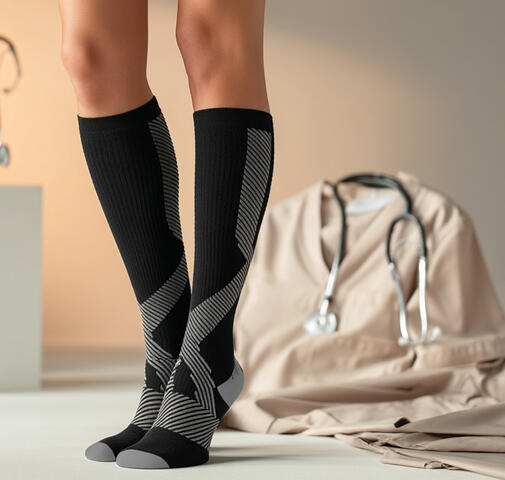
Graduated compression is one part of DVT prevention, especially during long periods of sitting or standing still, and clinical guidelines often include it for travelers and hospital patients. But no sock guarantees prevention — movement, hydration, and your clinician's advice matter just as much, especially if you have risk factors like recent surgery, pregnancy, or a clotting disorder.
Do not self-treat an active or suspected DVT with over-the-counter compression. DVT treatment is directed by a physician and may involve blood thinners and prescription-strength compression (often 20–30 mmHg or higher). Our 14–18 mmHg socks are light, everyday support — ask your doctor whether and when light compression is appropriate for you.
Swelling in one leg (not both), pain or tenderness in the calf, warmth, and redness or discoloration. If a clot travels to the lungs it can cause sudden shortness of breath or chest pain — that is an emergency. Seek medical care immediately if you notice these signs; do not wait to see if compression socks help.
Post-DVT compression is usually prescribed at higher strengths by your care team. Light 14–18 mmHg compression may be appropriate later for everyday comfort and mild swelling, but that decision belongs to your clinician — follow their guidance on strength and wear time.
Many clinicians suggest light graduated compression for long-haul travel, combined with walking the aisle, calf exercises, and hydration. If you have personal risk factors — previous clot, recent surgery, cancer, estrogen therapy — talk to your doctor before the flight, as you may need more than a sock.
Compression socks for travel · Compression socks for edema · Compression socks for varicose veins
Tested by nurses. Designed for long shifts.
Buy on Amazon