
Should you sleep in compression socks after a night shift?
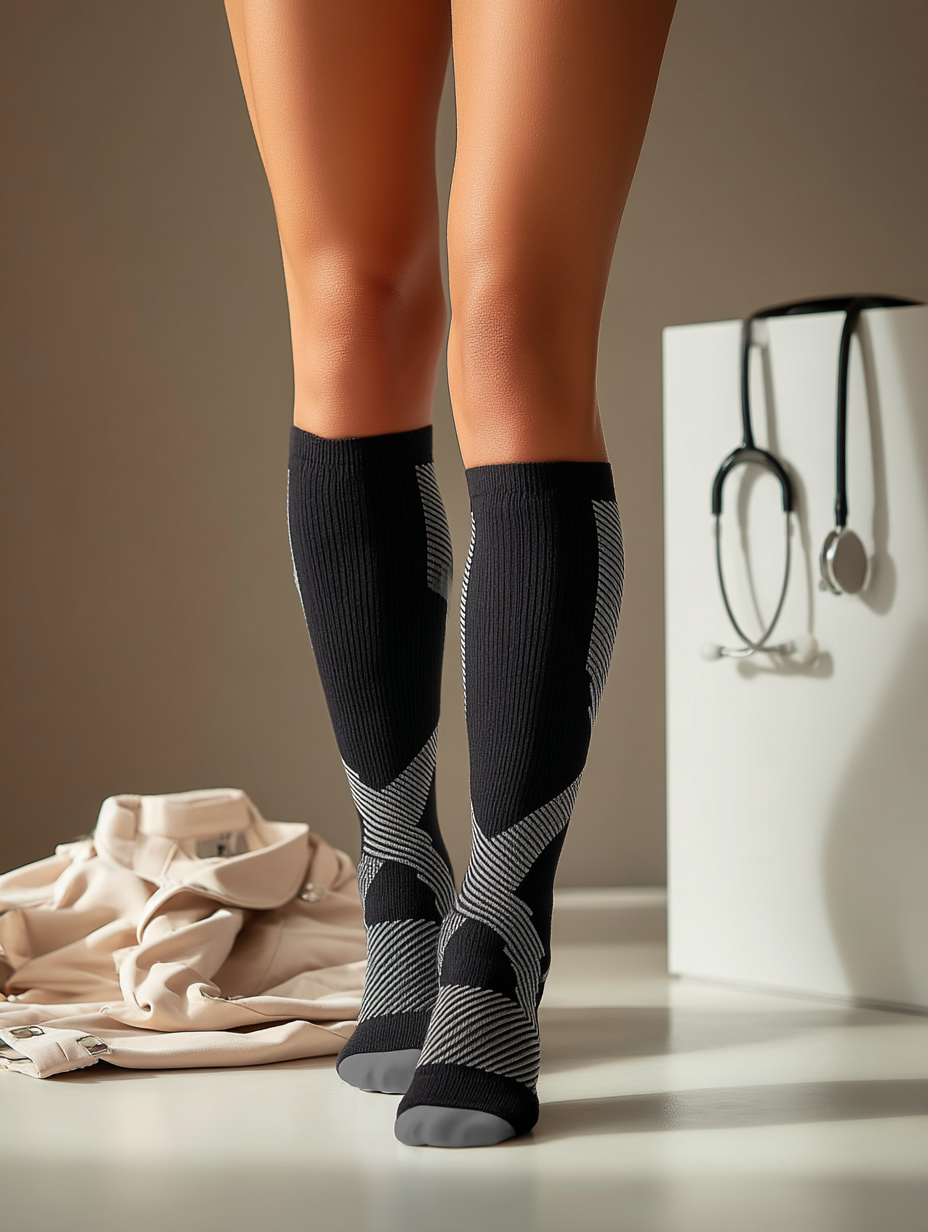
Working a night shift can be demanding on your body, especially your legs. Long hours of standing or walking can lead to feelings of fatigue, aching, and mild swelling in the lower extremities. Many nurses turn to compression socks for support during their shifts, but a common question arises: should you sleep in them afterward?
Understanding Compression Socks
Compression socks are designed to apply gentle pressure to your legs, with the strongest pressure at the ankle and gradually decreasing pressure up the leg. This graduated compression helps support venous return, encouraging blood flow from your legs back towards your heart. This mechanism can be beneficial for reducing leg fatigue, aching, and mild swelling often associated with prolonged standing or sitting.
Over-the-counter compression socks, typically in the 15-20 mmHg range, are considered mild and are commonly used for general wellness purposes. Stronger, medical-grade compression (20-30 mmHg and above) is usually recommended by a clinician for specific medical conditions.
Why Sleeping in Compression Socks is Generally Not Recommended
While compression socks offer benefits during periods of activity or prolonged upright posture, sleeping in them is generally not advised for most people. Here's why:
- Body Position Change: When you lie down to sleep, your legs are elevated to roughly the same level as your heart. This position naturally reduces the gravitational forces that contribute to blood pooling in the lower legs during the day. The body's natural circulation is often sufficient in this horizontal position, making the additional external pressure from compression socks less necessary.
- Potential for Discomfort: Some individuals may find compression socks uncomfortable to sleep in, potentially disrupting sleep quality. While designed to be supportive, the continuous pressure overnight might feel constrictive.
- Skin Irritation: Prolonged wear, especially during sleep, could increase the risk of skin irritation or pressure marks, particularly if the socks are too tight or not properly fitted.
For these reasons, most healthcare professionals suggest removing compression socks before going to bed. The primary benefit of compression socks is realized when you are upright and gravity is working against your circulation.
When to Wear Compression Socks
Compression socks are most effective when worn during periods when your legs are most susceptible to fatigue, aching, or swelling. This includes:
- During long shifts: Especially those involving prolonged standing or walking, like nursing shifts.
- During long periods of sitting: Such as long flights or extended car travel.
- For mild leg swelling: Often experienced during pregnancy or from prolonged immobility.
- To alleviate general leg fatigue: After a demanding day on your feet.
By wearing them during these times, you can help support your leg circulation and potentially reduce discomfort.
NursingRx Compression Socks and Your Post-Shift Routine
NursingRx compression socks are designed with the demands of long shifts in mind. Our knee-high, graduated compression socks provide 14-18 mmHg of pressure, which is in the mild, over-the-counter range. This level of compression is suitable for supporting your legs during a night shift, helping to address leg fatigue and mild swelling that can occur from prolonged standing or walking.
Features like the figure-8 ankle support wrap, targeted arch/plantar support, and a cotton-cushioned sole are designed to enhance comfort during your active hours. The seamed (non-bulky) toe and non-binding top band aim to provide a comfortable fit throughout your shift. After your night shift, once you're ready to rest, removing your NursingRx compression socks is generally recommended to allow your legs to relax naturally during sleep.
Important Considerations and Cautions
While compression socks are a general wellness product, it's important to use them safely and appropriately. Always ensure your socks fit correctly; sizing too small can raise pressure unsafely. If you experience any numbness, tingling, deep marks, or changes in skin color, remove your socks immediately.
Consult a clinician before using compression socks if you have:
- Peripheral arterial disease
- Diabetic neuropathy
- Skin infections or open wounds on your legs
- Significant heart failure
These conditions may require specific medical guidance regarding compression therapy.
The bottom line
For most individuals, wearing compression socks during a night shift can be beneficial for managing leg fatigue, aching, and mild swelling. However, it is generally recommended to remove them before sleeping. Your body's natural circulatory system, aided by a horizontal resting position, is usually sufficient during sleep. By using compression socks during your active hours and removing them for rest, you can maximize their benefits for leg comfort and support.
References (APA)
- Cleveland Clinic. (n.d.). Compression stockings. https://my.clevelandclinic.org/health/treatments/21172-compression-stockings
- MedlinePlus. (n.d.). Compression stockings. U.S. National Library of Medicine. https://medlineplus.gov/ency/patientinstructions/000598.htm
- National Health Service. (n.d.). Varicose veins. https://www.nhs.uk/conditions/varicose-veins/
General information only, not medical advice. Ask your clinician about your own health, especially with arterial disease, diabetic neuropathy, open wounds or heart failure.
Graduated 14-18 mmHg. Tested by nurses. Designed for long shifts.
Buy on Amazon