Figure-8 ankle support band
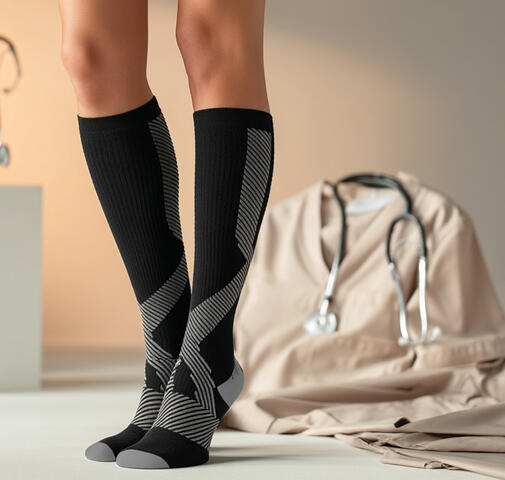
A knitted figure-8 wrap cradles the ankle and the base of the Achilles, adding gentle stability right where the tendon takes the most load with every step.
Guide
The Achilles tendon absorbs enormous load with every step — and nurses, runners, and anyone on their feet all day feel it first. NursingRx combines nurse-tested 14–18 mmHg graduated compression with a figure-8 ankle support band that cradles the tendon right where it works hardest, easing strain and managing end-of-day swelling.
A knitted figure-8 wrap cradles the ankle and the base of the Achilles, adding gentle stability right where the tendon takes the most load with every step.
Firmest at the foot and ankle, the gradient helps manage the swelling that gathers around a sore Achilles by the end of a long day on your feet.
A terry-loop cotton foot bed softens heel strike on hard hospital floors, reducing the jarring that aggravates a tender tendon.
A flat seamless toe and moisture-wicking 60% nylon, 25% elastane, 15% polyester structure mean no rubbing or hot spots — important when the back of your heel is already irritated.
They can help manage it. Graduated compression limits the swelling that builds around a sore tendon, and a supportive ankle band adds gentle stability during daily activity. They're a comfort and support measure, not a cure — tendon healing mainly comes from load management, stretching, and time, ideally guided by a clinician.
Many people wear light compression during low-impact activity to keep the ankle supported and swelling down. But if running or jumping reproduces your Achilles pain, that's a sign to scale back and talk to a clinician or physical therapist about a rehab plan — don't push through tendon pain.
A rigid brace restricts motion; a compression sock with a figure-8 support band offers gentle, flexible stability you can wear inside normal shoes all day. For mild Achilles irritation and everyday support, that's often the more practical option. Significant injuries may need more immobilization — a clinician can advise.
Mild tendon irritation often settles over weeks with reduced load, supportive footwear, and compression. Tendons heal slowly, so expect gradual progress rather than overnight relief. Pain that's severe, worsening, or followed by a sudden 'pop' needs medical attention promptly.
If you felt or heard a pop in the back of your ankle, can't push off or stand on tiptoe, have sudden one-sided swelling, or have diabetes with reduced foot sensation, see a clinician before self-treating. A suspected Achilles rupture is urgent.
Compression socks for plantar fasciitis · Compression socks for athletes · Sizing guide

Tested by nurses. Designed for long shifts.
Buy on Amazon