Graduated 14–18 mmHg pressure
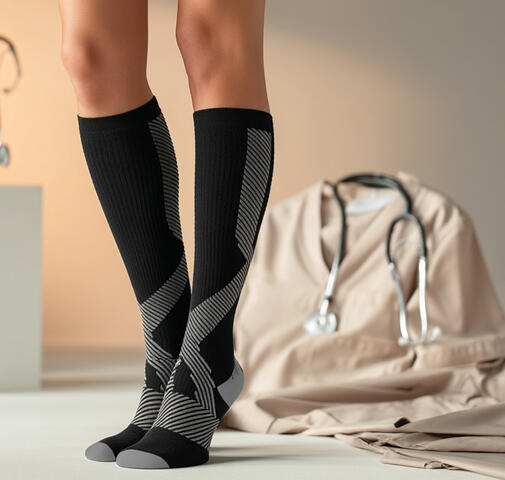
Firmest at the ankle and easing up the calf, the gradient helps push blood back toward the heart instead of letting it pool in the small surface veins where spider veins form.
Guide
Spider veins show up when blood pools in the small veins near the surface of your skin — and long days standing give gravity all the time it needs. Nurse-tested 14–18 mmHg graduated compression keeps blood moving back toward the heart, easing the heaviness and aching that come with spider veins and supporting healthier circulation habits every shift.
Firmest at the ankle and easing up the calf, the gradient helps push blood back toward the heart instead of letting it pool in the small surface veins where spider veins form.
Standing still for hours lets gravity work against your circulation. Light graduated compression counteracts that pooling, easing the heaviness and aching that often accompany spider veins.
A 60% nylon, 25% elastane, 15% polyester knit holds its pressure without trapping heat, so you can actually wear them through a full 12-hour shift.
A terry-loop cotton foot bed softens every step on hard floors, because a sock you only wear once doesn't help your legs at all.
No — compression socks can't remove spider veins that already exist. What they can do is support circulation, ease the heaviness and aching that often come with them, and help slow the conditions that let new ones form. Treatments like sclerotherapy are the medical route for removal.
For everyday support and prevention habits, yes — 14–18 mmHg is the lightest graduated tier, made for all-day wear without a prescription. If a clinician has recommended a specific compression level for your veins, follow their guidance.
Most people put them on first thing in the morning, before swelling starts, and wear them through the day — especially on days spent standing. Take them off before bed unless a clinician tells you otherwise.
Spider veins on their own are usually a cosmetic concern, not a medical one. But new or worsening veins alongside swelling, pain, skin changes, or a feeling of heaviness that keeps getting worse are worth discussing with a clinician — they can signal underlying vein disease.
If you have peripheral artery disease, diabetic neuropathy with reduced foot sensation, open wounds on your legs, or sudden one-sided swelling, check with a clinician before wearing compression. Sudden swelling in one leg, especially with pain or warmth, needs medical attention right away.
Compression socks for varicose veins · Compression socks for standing all day · Sizing guide
Tested by nurses. Designed for long shifts.
Buy on Amazon