Anatomical arch support
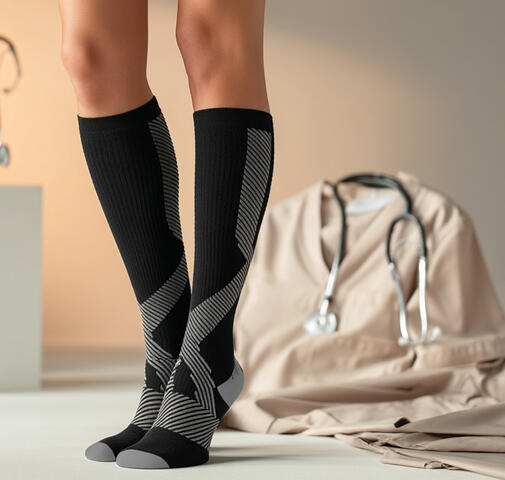
A contoured knit hugs the midfoot and gives a low or fallen arch the gentle lift it misses, reducing the strain that builds up over miles of hospital corridors.
Guide
Flat feet work harder on long days — without a natural arch to absorb impact, every step loads the muscles of the foot and lower leg. NursingRx combines nurse-tested 14–18 mmHg graduated compression with anatomical arch support that gives a fallen arch gentle lift, easing fatigue and keeping end-of-day swelling in check.
A contoured knit hugs the midfoot and gives a low or fallen arch the gentle lift it misses, reducing the strain that builds up over miles of hospital corridors.
Firmest at the foot and ankle, the gradient keeps blood and fluid moving upward — helpful because flat feet often come with swelling and heaviness by day's end.
A terry-loop cotton foot bed softens every heel strike on hard floors, easing the impact that flat, less-springy arches absorb less well.
A flat seamless toe and moisture-wicking 60% nylon, 25% elastane, 15% polyester structure keep feet cool and blister-free through a full 12-hour shift.
They can help with the symptoms. Compression socks don't change the shape of your arch, but anatomical arch support plus graduated compression can ease the foot fatigue, ankle swelling, and leg heaviness that often come with flat feet — especially for people who stand or walk all day.
No — they complement them. A compression sock with built-in arch support offers gentle, flexible lift you can wear alone in normal shoes, but if a podiatrist has prescribed orthotics, keep using them. Many people wear compression socks together with their orthotics for combined support and circulation benefits.
Fallen arches change how your foot muscles pump blood back up the leg, so fluid tends to pool around the feet and ankles after long days. Graduated compression — firmest at the ankle — helps push that fluid back up, which is why many people with flat feet notice less end-of-day swelling.
For everyday comfort, fatigue, and mild swelling, a light 14–18 mmHg graduated sock is a practical starting point — supportive without feeling restrictive. If you have significant pain, pronounced swelling, or a diagnosed foot condition, ask a clinician whether a higher, prescribed level is appropriate.
See a clinician if your flat feet are new or one-sided, if you have persistent arch or heel pain that doesn't improve with rest and supportive footwear, if you have diabetes or reduced foot sensation, or if one leg swells suddenly. Those situations need an evaluation before self-treating.
Compression socks for plantar fasciitis · Compression socks for standing all day · Sizing guide
Tested by nurses. Designed for long shifts.
Buy on Amazon