Graduated 14–18 mmHg pressure
Firmest at the ankle and easing up the calf, the gradient helps push blood back toward the heart instead of letting it pool in your lower legs.
Guide
Most compression socks are sized and styled for women. Men need the same graduated pressure in a fit that works for wider calves and bigger feet — without the pastel packaging. NursingRx is a nurse-tested 14–18 mmHg sock built for 12-hour shifts, long flights, and hard training days.
Firmest at the ankle and easing up the calf, the gradient helps push blood back toward the heart instead of letting it pool in your lower legs.
A wider calf opening and longer foot bed mean the sock actually reaches below the knee without pinching — check the size chart before you buy.
A terry-loop cotton foot bed softens every step on concrete floors, while the breathable cotton-poly blend keeps feet from overheating.
A 60% nylon, 25% elastane, 15% polyester knit holds its graduated pressure wash after wash and doesn't slide down your calf mid-shift.
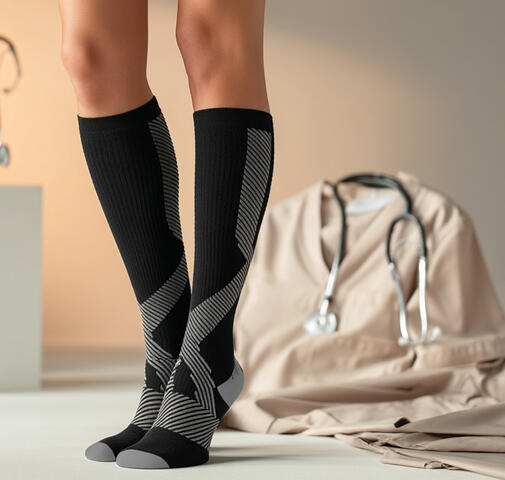
The compression itself works the same way. What differs is fit: men's sizing accounts for wider calves, larger feet, and longer legs. NursingRx socks are unisex, with a size chart that covers men's shoe sizes and calf measurements — measure your calf at its widest point and match it to the chart.
Like a firm, even hug around your ankle and calf — snug but never painful. It's the lightest graduated compression tier, made for all-day wear without a prescription. You should be able to slide a finger under the top band comfortably.
Yes. Many men wear light graduated compression during training to limit post-workout swelling and heaviness, and during recovery days to keep legs feeling fresh. They're not a substitute for rest, but they make long days on your feet noticeably easier.
Machine wash cold on a gentle cycle and air dry. Heat from a dryer breaks down the elastane that provides the graduated pressure, so skip the dryer and they'll hold their squeeze far longer.
If you have peripheral artery disease, diabetic neuropathy with reduced foot sensation, open wounds on your legs, or sudden one-sided swelling, check with a clinician before wearing compression. Sudden swelling in one leg, especially with pain or warmth, needs medical attention right away.
Compression socks for standing all day · Compression socks for athletes · Sizing guide
Tested by nurses. Designed for long shifts.
Buy on Amazon